


A LOBBY THAT WELCOMES CARE: THE RENOVATION OF THE MATERNAL-CHILD LOBBY AT LA PAZ UNIVERSITY HOSPITAL
In hospital architecture, the first contact with a building holds an importance that goes far beyond functionality. The entrance to a hospital is the point where expectations, concerns, and very different needs converge. For this reason, entrance spaces are not merely transitional areas, but also settings where the patient experience begins—places for gathering, waiting, and resting.
The renovation of the maternal-child lobby at La Paz University Hospital stems precisely from this reflection. This space constitutes a strategic point within the hospital, as it organizes circulation toward the maternity and pediatric areas, concentrating a constant flow of patients, relatives, and healthcare professionals. In addition to functioning as an entrance, the lobby is also a place for waiting, orientation, and meeting.
The intervention by ENERO Arquitectura is conceived as an opportunity to transform this space into a clearer, more welcoming, and more understandable environment for users. Hospital architecture has the capacity to influence how healthcare spaces are experienced, and in this case, the goal was to create an atmosphere that would especially support those who spend the most time there.
Through spatial reorganization, a careful selection of materials, and a graphic proposal inspired by nature, the project seeks to humanize access to the maternal-child area and turn it into a more pleasant place within the hospital.
Hall materno-infantil del Hospital Universitario La Paz. Fotografía de espacio.photo
A KEY SPACE IN THE ORGANIZATION OF THE HOSPITAL
The maternal-child lobby at La Paz University Hospital is a highly relevant space within the daily functioning of the center. It acts as a hub where circulation routes leading to maternity and pediatric areas converge—two healthcare fields that receive a large number of users every day.
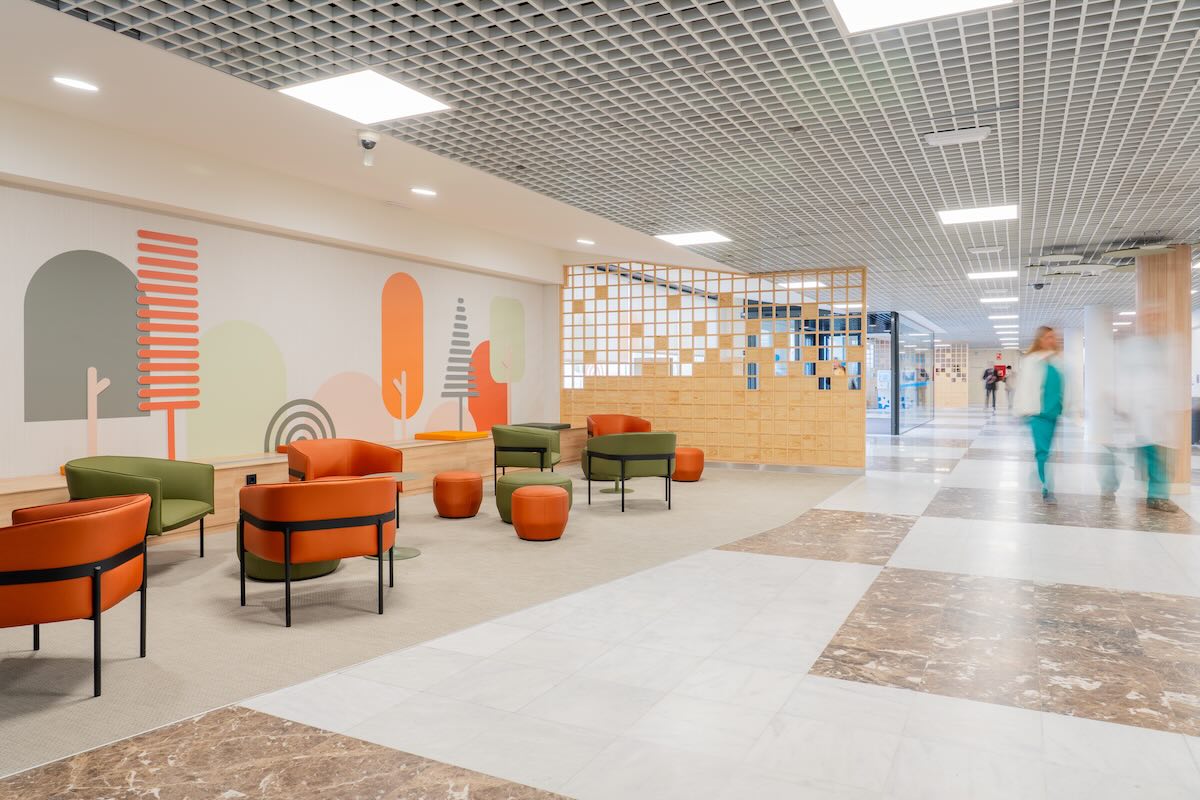
This lobby therefore functions as a transitional space between different routes within the hospital and as a multifunctional environment where several uses coexist: general access to the Maternal-Child Hospital, circulation between different hospital areas, the patient care zone, waiting areas for relatives of pediatric surgery patients, and even the hosting of various events, including the spontaneous or scheduled use of the piano for concerts. Its role within hospital architecture is fundamental, as it helps orient users and structure movement flows within the building.
Before the renovation, the space presented several limitations that hindered its performance. One of the most evident problems was the access system. The existing revolving door was unable to adequately handle the high flow of people passing through this point, which often made it necessary to keep emergency doors open to facilitate entry.
Additionally, the space felt unwelcoming. The existing materials conveyed an excessively cold atmosphere, and the chromatic contrasts contributed to a somewhat harsh perception of the environment. In such a sensitive area as the maternal-child unit—where particularly vulnerable patients are treated—it was important to transform this perception.
The intervention was therefore conceived with a dual objective: to improve access functionality while simultaneously creating a more pleasant space for daily users. To achieve this, it was necessary to reorganize part of the interior layout and rethink the design of the lobby from a user-centered perspective.
Hall materno-infantil del Hospital Universitario La Paz. Fotografía de espacio.photo
HUMANIZING THE SPACE BY EVOKING NATURE WITHIN THE HOSPITAL
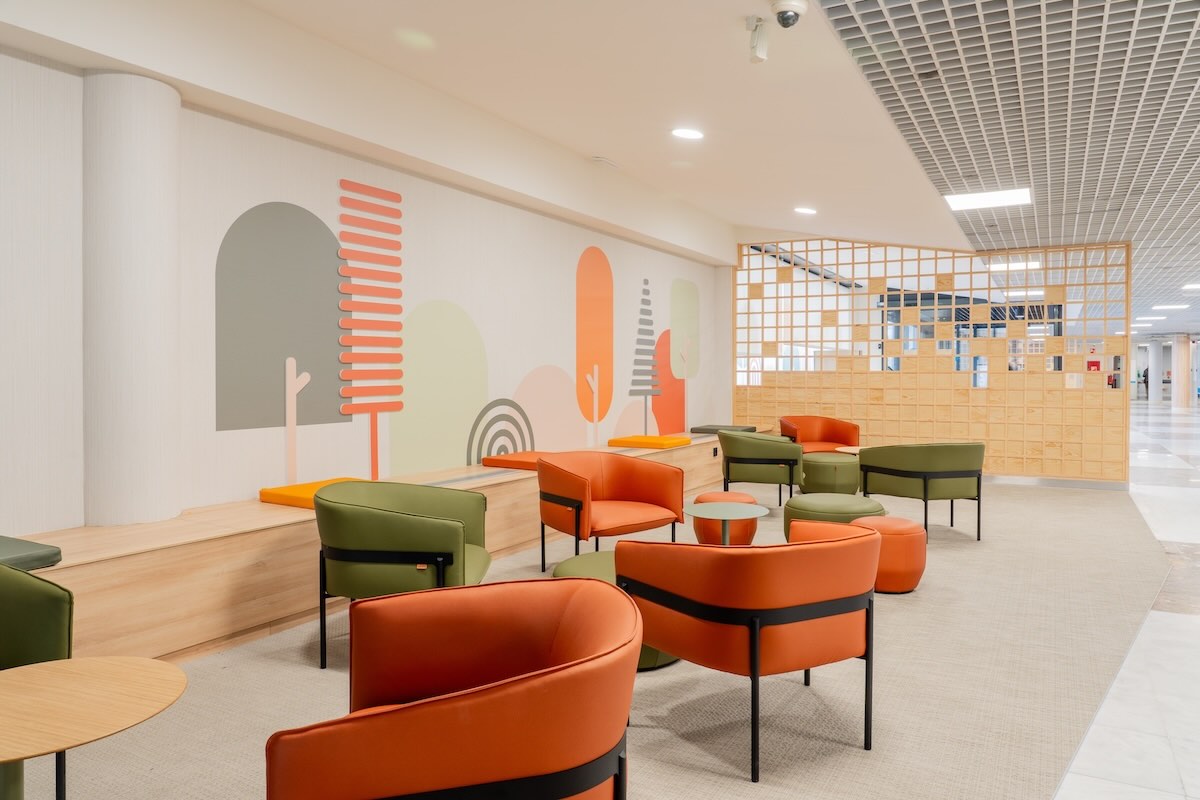
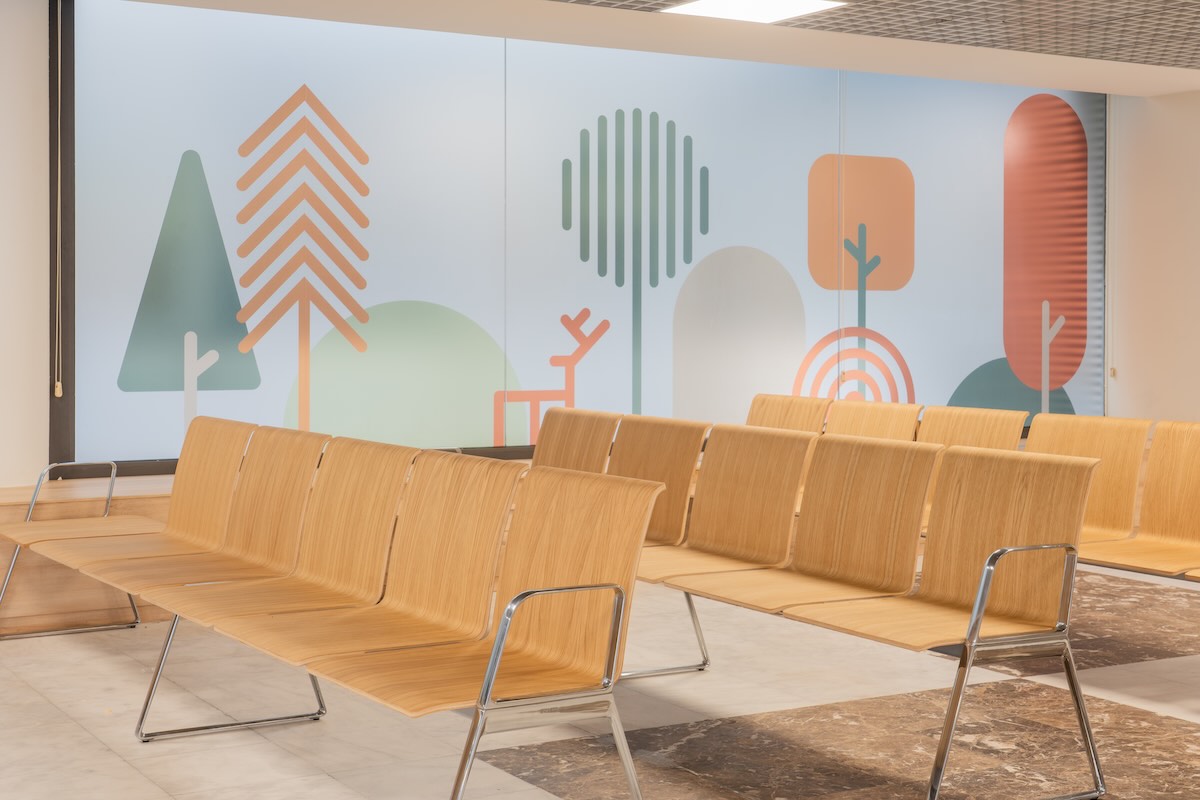
One of the central ideas of the project was the search for a concept that would help humanize the space and create a recognizable identity for the maternal-child area. The inspiration came from the hospital’s surroundings, located near Parque Norte in Madrid.
Nature and warm tones thus become the guiding thread of the project, bringing a closer, warmer, and more recognizable atmosphere for users.
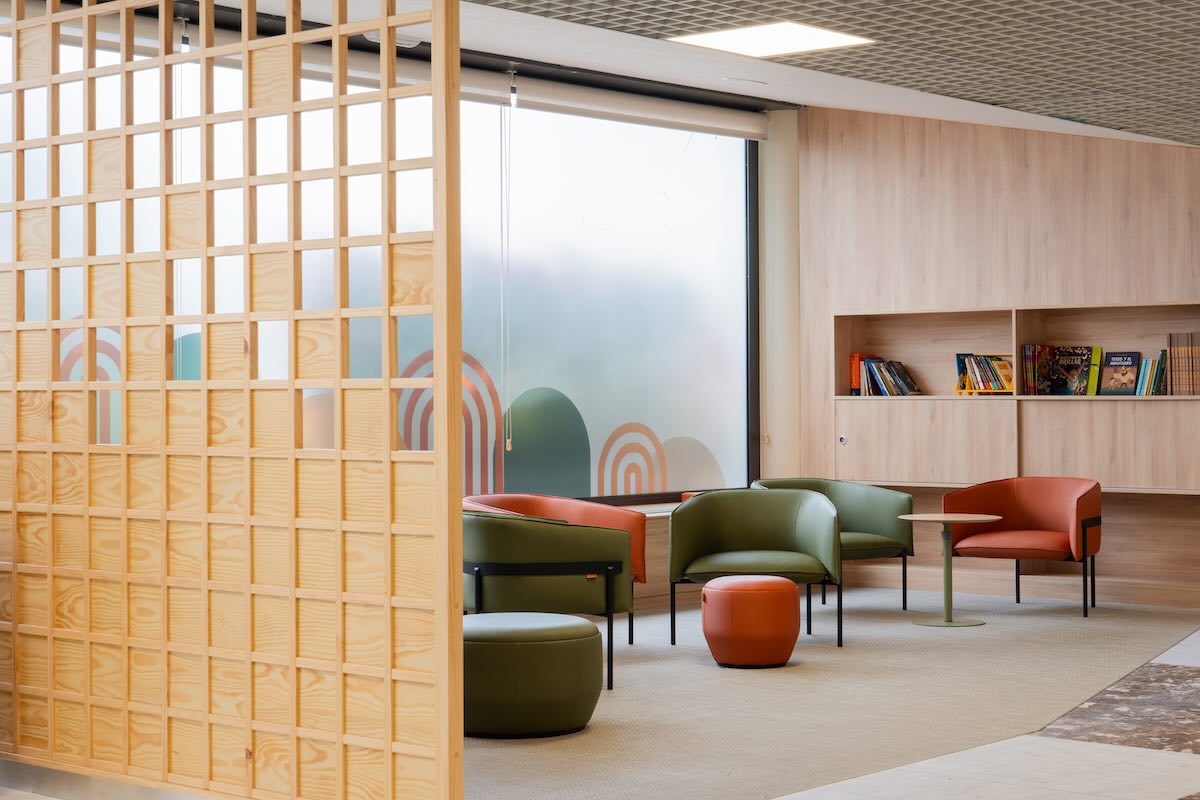
This concept is not translated into a literal representation, but rather into a graphic and spatial language based on geometric forms, textures, and elements that evoke the natural world. The proposal combines graphic resources with architectural interventions that help create a more immersive and dynamic environment. Additionally, the use of non-fixed furniture allows the creation of different zones for privacy or interaction.
The project incorporates small play elements for children, as well as graphic resources that add rhythm and texture to the space. At the same time, the intervention seeks to maintain a balanced visual language, avoiding excessive decorative overload.
The result is an environment that combines spatial clarity with a distinct identity, capable of emotionally supporting those who use it. In hospital architecture, such decisions have a direct impact on the experience of patients and their families, especially in areas dedicated to mothers and children.
For the design of the restrooms, we worked closely with healthcare staff to understand the specific needs of this space. As a result, we designed a family restroom without gender segregation, where children can be accompanied by an adult. Additionally, we created a dedicated breastfeeding space, featuring calm tones and soft lighting to ensure comfort and privacy.
Hall materno-infantil del Hospital Universitario La Paz. Fotografía de espacio.photo
MATERIALS, LIGHT, AND SPATIAL ORGANIZATION
The general concept of the project is materialized through a series of architectural decisions affecting both spatial organization and the selection of materials and construction systems.
One of the first actions was the transformation of the access system. The old revolving door was replaced with a solution that better manages the flow of people while creating a transitional space before entering the lobby. This element acts as an intermediate zone between the exterior and interior of the hospital, helping to organize circulation toward the maternity and pediatric areas. It also eliminates direct exposure to drafts previously affecting staff and ensures efficient evacuation in case of emergency.
Inside, the intervention aims to reorganize some offices and redistribute waiting areas to improve spatial legibility. The goal was to create clearer and more understandable environments, facilitating user orientation within the lobby.
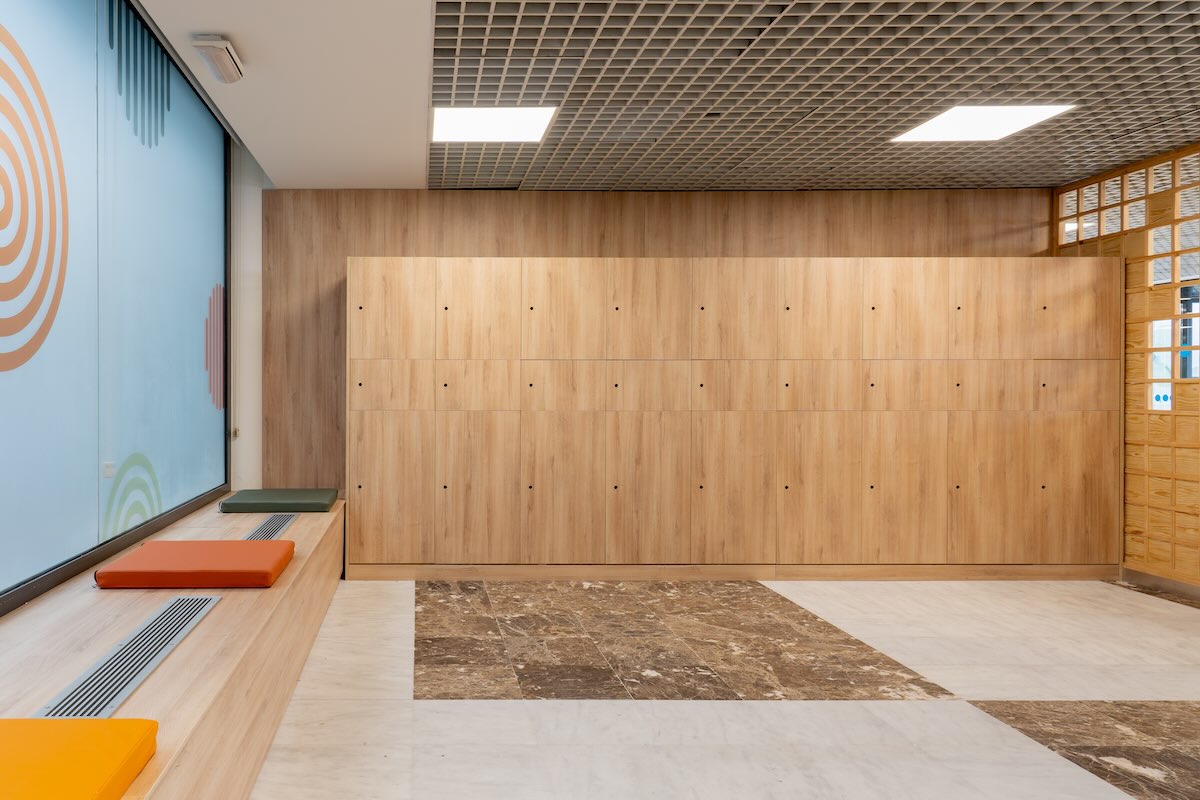
The selection of materials was particularly important in reinforcing the idea of a warmer and more welcoming environment. Wood-textured laminates were used, combined with monochromatic surfaces in neutral tones that provide visual continuity. These materials evoke the warmth of nature while maintaining the durability required for a high-traffic space such as a hospital lobby.
Vertical surfaces incorporate textured vinyls and acoustic panels, developed in collaboration with Chispum Studio, improving environmental comfort. Existing architectural elements, such as columns, are reinterpreted as references to the natural world, reinforcing the forest-inspired concept of the design.
The restrooms follow the same language, using stone-like materials in grayish-brown tones combined with green walls.
Furniture also plays a fundamental role in shaping the atmosphere. Technical textiles were specified for upholstery, chosen for their durability, ease of cleaning, and resistance to intensive use in healthcare environments.
The intervention is completed with a color palette inspired by nature—earth tones and soft greens—and warmer lighting that contributes to a sense of well-being. All of this transforms the lobby into a space where hospital architecture not only organizes circulation but also cares for the experience of its users.
Many thanks to La Paz University Hospital and the Nemesio Diez Foundation for trusting ENERO Arquitectura with this commission.
Hall materno-infantil del Hospital Universitario La Paz. Fotografía de espacio.photo