


A VERY SPECIAL YEAR-END FOR ENERO ARQUITECTURA
2025 has been a very special year for ENERO Arquitectura, not only because of the projects carried out, but also because of the recognition the team has received and the technological advances we are developing.
Throughout this year, we have opened a window for you to get to know several of the teams that make up ENERO Arquitectura more closely, and we would like you to join us in 2026 as well, a year in which we will celebrate our 20th anniversary.
A HOSPITAL ARCHITECTURE THAT CROSSES BORDERS AND PUTS PEOPLE AT THE CENTER
With projects that cross borders and typologies, ENERO Arquitectura reaffirmed in 2025 its commitment to a hospital architecture that puts people at the center, combining technological innovation, sustainability, and a sensitive approach to spaces of care.
Among the most significant milestones is the topping-out ceremony of Hospiten Madrid Boadilla Hospital. This new center, with more than 55,000 m², will expand the Hospiten Group’s healthcare network in the Community of Madrid, while also incorporating criteria of energy efficiency, functional flexibility, and a clear orientation toward patient wellbeing.
We would also highlight the completion of the extension to Quirónsalud Badalona Hospital. This intervention adds 1,330 m² of new healthcare surface area and incorporates 36 additional single rooms, including one suite on each of the two new floors. In addition to the rooms, the extension includes workrooms, nursing stations, and technical support areas, increasing the center’s care capacity without interrupting its healthcare activity.
Another of the most important interventions we are currently completing is the new lobby of La Paz Hospital’s Maternal-Child building. This space has been conceived to welcome and support users from the very first moment, with an inclusive and emotional design approach that anticipates the overall transformation of the complex.
At the national level, ENERO continues to work on landmark projects. The new Building 8 (4,471 m²) at Fundación Jiménez Díaz expands the hospital complex with state-of-the-art facilities. At the same time, work continues on the different phases of the comprehensive refurbishment of the healthcare center, and the renovations at Quirónsalud Madrid Pozuelo Hospital have made it possible to renew emergency areas, consulting rooms, and staff rest areas. These interventions are intended to improve the efficiency and comfort of these centers. The work at Ruber Juan Bravo and Ruber Internacional hospitals is also noteworthy.
In Catalonia, ENERO Arquitectura continues to make progress on a significant group of interventions that reinforce the transformation and modernization of the region’s healthcare system. Our work maintains a constant focus on improving key infrastructures such as Hospital Clínic de Barcelona, where we continue to develop new phases of renovation, as well as Hospital General de Catalunya and Hospital Universitari Sagrat Cor, where we are promoting interventions aimed at environmental upgrading, operational efficiency, and the optimization of care spaces. These initiatives, together with other technical and administrative support projects within the Catalan healthcare network, consolidate our ongoing presence and our commitment to a sustainable, functional, and patient-centered healthcare architecture.
Meanwhile, we continue working on the Quirónsalud Valencia Hospital project (42,674 m²). This flagship center, with a total of 116 rooms, 134 outpatient consulting rooms, and 16 operating theaters, will be located just a few metres from Hospital La Fe. Construction is scheduled to begin in early 2026.
At the international level, ENERO continues exporting its healthcare architecture model to new territories. This year, we have continued working on the construction phase of the Goumin Clinic in Abidjan, Ivory Coast, and have started a new hospital project of more than 20,000 m² in the same African city. In the Caribbean region, we continue to work on the project for a new hospital in Punta Cana, Dominican Republic (9,808 m²).
Outside the field of hospital architecture, another of the major projects currently underway is the new NCB3 Animal Facility in Algete, a highly specialized infrastructure intended for biomedical research. Its design responds to international standards of biocontainment and operability, and it represents a decisive step forward in the scientific capacity of the national research ecosystem. It is expected to be completed in June 2026.
In the hotel sector, 2025 has brought us a very special recognition: first prize in the tender for the comprehensive refurbishment of the Parador de Turismo de Gredos. This emblematic project involves intervening in a historic building that marks the origin of Spain’s Paradores network, combining heritage, sustainability, and new user experiences.
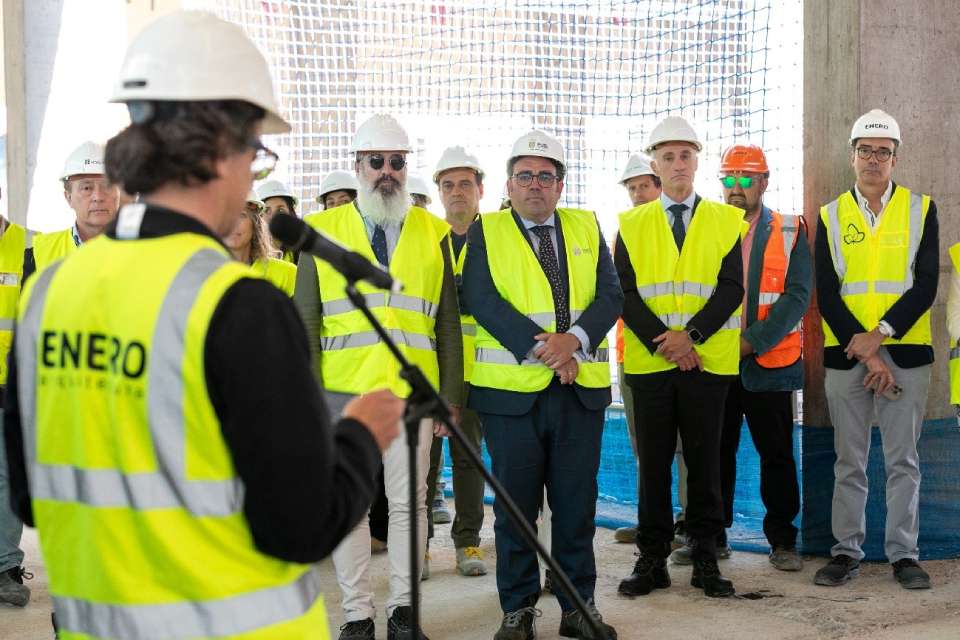
Francisco Ortega speaking during the topping-out ceremony of Hospiten Madrid Boadilla Hospital.
A YEAR FULL OF RECOGNITION
In addition to the different projects, this year the work and career of our director, Francisco Ortega Montoliu, have also been recognized both inside and outside the practice. Francisco Ortega has been awarded the 2025 Rafael Manzano Prize for New Traditional Architecture, one of the most important awards in Europe in the field of architecture and heritage conservation. This recognition highlights his ability to give new life to historic and rural buildings, respecting their authenticity and adapting them to contemporary needs. His work has contributed not only to the conservation of architectural heritage, but also to the economic and social revitalization of the places in which he intervenes.
He was also invited to speak at the International Congress of Building Cultures, organized by the Foundation for Traditional Building Cultures. Francisco focused his talk on the dialogue between contemporary architecture and traditional crafts, using as an example the rehabilitation of the Pardo Donlebún palaces in Asturias.
In addition, Francisco Ortega joined the teaching staff of the course The Crafts of Construction in Contemporary Architecture, organized by the Continuing Education Institute of COAM in collaboration with the Foundation for Traditional Building Cultures. This initiative, focused on the recovery of vernacular techniques and materials applied to contemporary architecture, seeks to highlight crafts as an essential part of the construction process. In support of this educational work, ENERO Arquitectura has granted scholarships to two students on the program, reaffirming its commitment to the transmission of knowledge, sustainability, and the preservation of building culture.
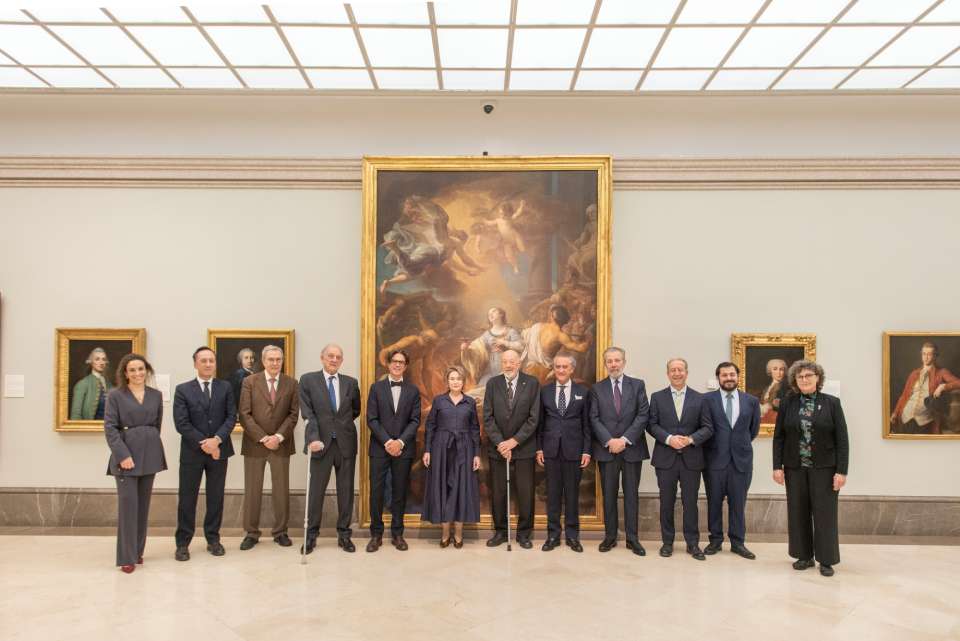
Francisco Ortega together with the jury of the Rafael Manzano Prize for New Traditional Architecture.
TECHNOLOGY AS A DRIVER OF TRANSFORMATION
2025 has also been a year of digital and technological transformation for ENERO Arquitectura.
Obtaining ISO 19650-2:2018 certification marks a milestone in our innovation and quality strategy, accrediting excellence in information management within BIM environments and consolidating a collaborative, transparent, and traceable working model. This recognition not only validates our processes, but also reinforces our commitment to a more precise, coordinated, and efficient architecture.
At the same time, we have developed ENERO HUB, a digital platform that centralizes and enhances all the firm’s resources, tools, and knowledge. Designed entirely by our team using cutting-edge technologies, this tool is transforming the way we work, share knowledge, and manage project complexity.
ENERO HUB acts as the digital heart of the practice. It integrates different training, research, and management environments that allow technology to support the creative process without replacing it. Through modules such as Enero Academy, a library of more than one hundred internal courses, we promote continuous training with intelligent systems for organization and monitoring. In Enero Lab, we explore new generative and visual tools that improve architectural communication and the presentation of ideas. The Digital Technical Library brings together all our accumulated knowledge: materials, construction details, competition documentation, and site photographs, all available through an advanced search system.
Other environments, such as BIM Manager and the Urban Planning Regulations module, integrate specialized chatbots and interactive systems that optimize the technical and legal management of projects, while the Studio Management area makes it possible to coordinate resources, teams, and workspaces in real time.
With these tools, ENERO Arquitectura is moving toward a more agile, collaborative, and connected digital model, where technology amplifies what has always defined our practice: precision, innovation, and care for every detail.
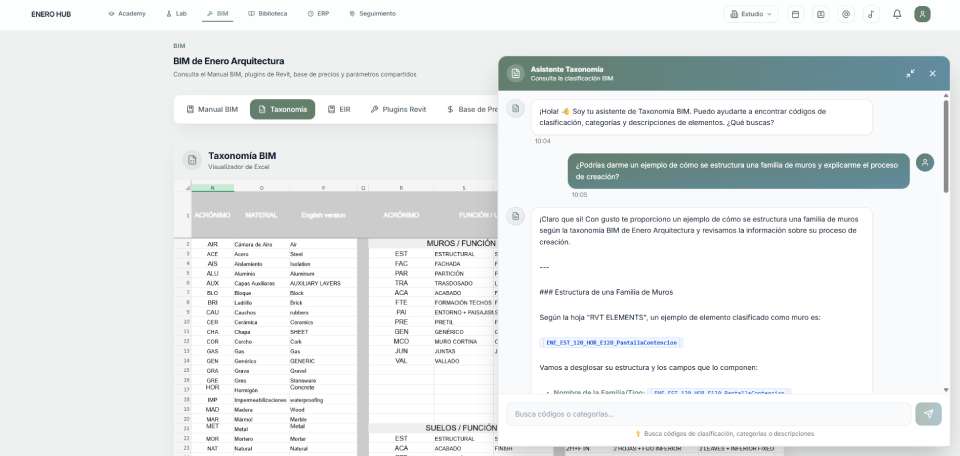
Image of ENERO Arquitectura’s BIM Taxonomy assistant.
ENERO ARQUITECTURA CONTINUES TO LOOK TO THE FUTURE
Next year will be very special for us. In 2026, ENERO Arquitectura will celebrate its 20th anniversary: two decades dedicated to designing spaces that care. Throughout the year, we will share a journey through our history, emblematic projects, and lessons learned, along with many other surprises that will reflect the spirit with which we continue looking toward the future.