


INHABITING HERITAGE: HOTEL PROJECTS BY ENERO ARQUITECTURA
Intervening in heritage requires knowledge, precision, and a contemporary perspective that sees the past as a starting point, not a limit. ENERO Arquitectura applies this perspective in its hotel projects, especially those located in historic buildings where architecture must become a bridge between memory and the present. With solid experience in Paradores and unique hotels, ENERO Arquitectura combines innovation and respect for the historical context. This particular vision allows the creation of spaces that dialogue with their surroundings, enhance the user experience, and extend the useful life of the built heritage.
Since its foundation in 2006, ENERO Arquitectura has managed more than 3,400,000 m² of projects, with over 600,000 m² built, and a significant part of this area has been dedicated to rehabilitation and new construction projects in the hotel sector. The multidisciplinary team of the studio has worked on medium, high, and luxury hotels, adapting to different scales and typologies. Highlights include rural enclaves with a strong historical significance, such as the Parador de Ciudad Rodrigo, and tourist complexes in coastal environments like the Hotel Cala Tarida in Ibiza.
The studio’s comprehensive approach allows it to tackle all phases of the project. Each intervention aims to generate functional environments that are respectful of the surroundings and designed to last.
PARADOR DE CIUDAD RODRIGO: ARCHITECTURE WITH A DEFENSIVE VOCATION AND A CONTEMPORARY PERSPECTIVE
Located in a fortified medieval site, the Parador de Ciudad Rodrigo is a construction with high heritage and landscape value.
The intervention carried out by ENERO Arquitectura covers a total of 1,100 m², updating its facilities without compromising the building’s identity. Work was done on rooms, common areas, and technical systems, introducing improvements in accessibility, energy efficiency, and thermal comfort.
The project balances respect for the original materiality, composed of ashlar walls and historic carpentry, with current solutions that meet the demands of contemporary tourism.
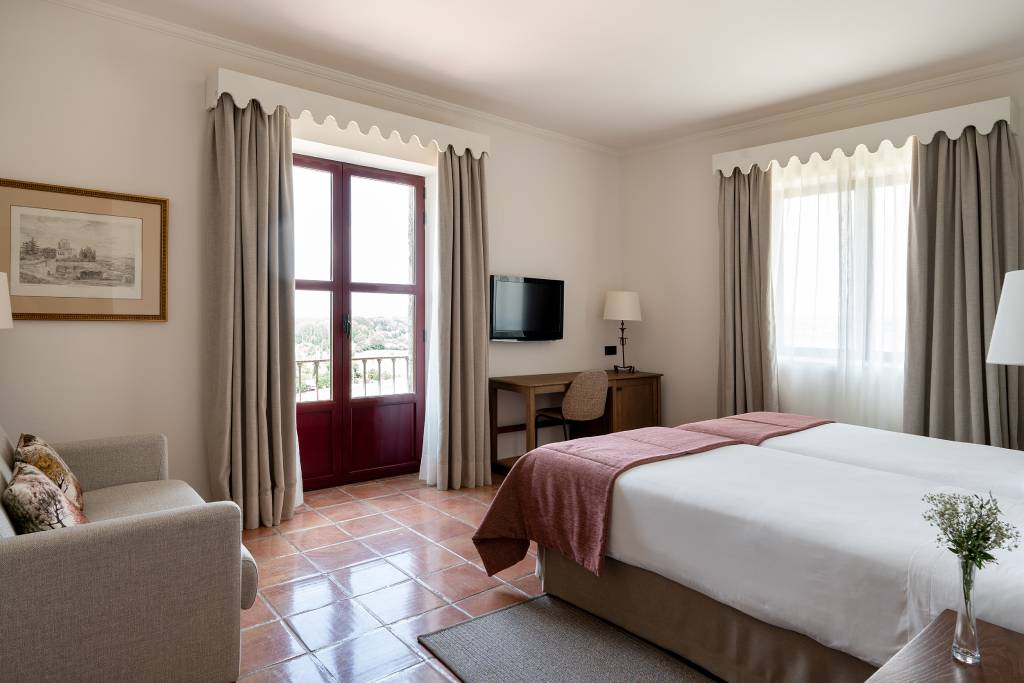
Imagen de una de las habitaciones reformadas en el Parador de Ciudad Rodrigo. Fotografía cedida por Paradores.
PARADOR DE OLITE: RENOVATING FROM HISTORY
The intervention in the Parador de Olite, currently underway, represents one of the studio’s most complex challenges due to its status as a highly protected Gothic building.
This Roman-origin building occupies the oldest wing of the Palace of the Kings of Navarre. It was expanded in the 15th century and is the most important example of civil Gothic architecture in Navarre.
The proposal by ENERO Arquitectura, awarded by competition, plans a renovation that respects the original architectural structure while incorporating sustainability and universal design strategies.
The goal is to make the Parador a benchmark of historical hospitality adapted to the 21st century, improving flows, facilities, and efficiency without altering the building’s symbolic significance.
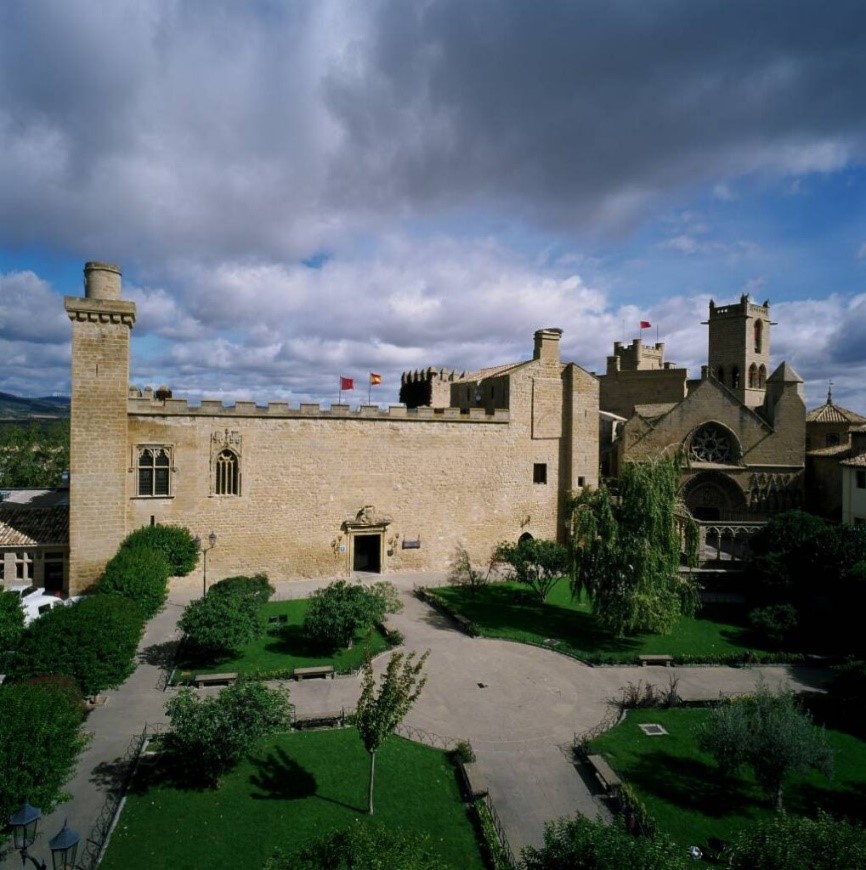
Fotografía exterior del Parador de Olite. Imagen cedida por Paradores.
PARADOR DE GREDOS: THE ORIGIN OF THE JOURNEY
The Parador de Gredos is the first to be inaugurated in the national network in 1928. Almost a century later, ENERO Arquitectura is tackling its renovation with the aim of maintaining its historical value and updating it for new uses.
The intervention, currently in its final phase, works on structure, envelope, and installations, reorganizing the interior program and optimizing the building’s energy efficiency.
All this under a strategy of minimal visual intervention and maximum functional efficiency, respecting its sober and monumental character.
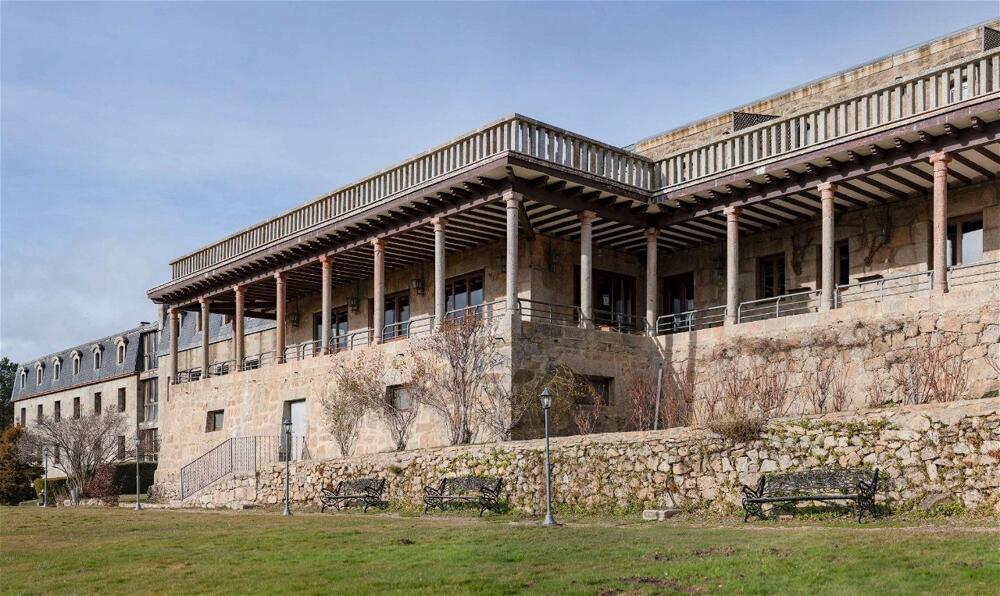
Fotografía exterior del Parador de Gredos. Imagen cedida por Paradores.
HOTEL CALA TARIDA: MEDITERRANEAN HOSPITALITY WITH LOCAL IDENTITY
Located on the west coast of Ibiza, the Hotel Cala Tarida is an example of intervention on an existing complex to update its image and improve its connection with the surroundings.
The main intention of the intervention is to give the building a modern yet sober aesthetic, where the absolute prominence falls on the beauty of the surroundings, the Cala Tarida itself, and the Mediterranean Sea, while respecting the sustainability of the place.
In the design of the interior spaces, ENERO Arquitectura manages to create a friendly, modern, and functional environment through the use of craftsmanship and local materials, such as esparto grass used as a dividing element in the exterior galleries of the rooms. These strategies generate aesthetic coherence in the complex and function as a visual filter in these circulation areas.
The result is a proposal coherent with the natural environment that offers comfort, efficiency, and a more integrated experience with the Ibizan landscape.
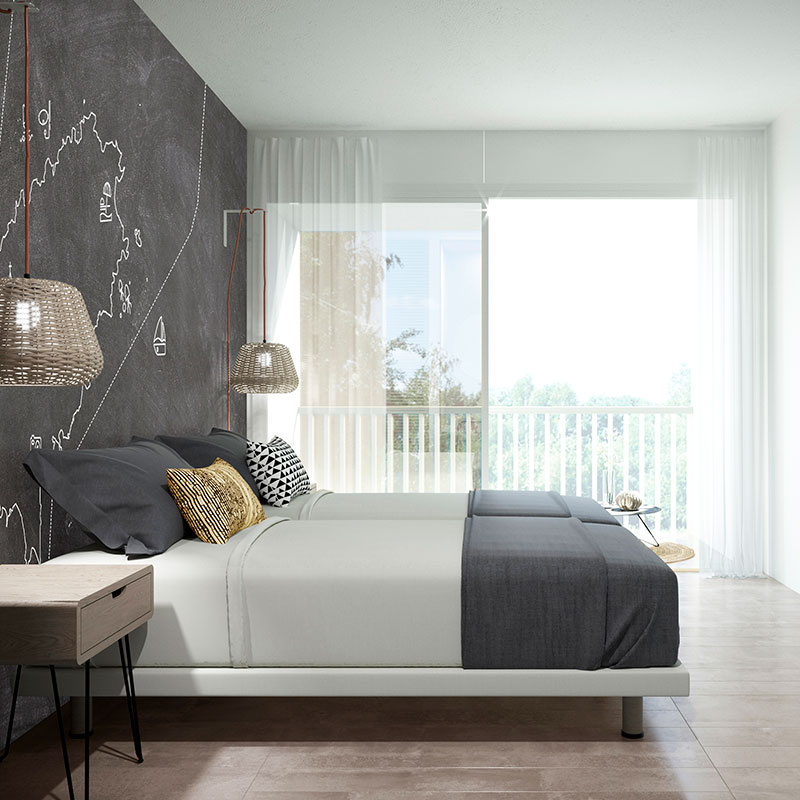
Habitación del Hotel Cala Tarida. Fotografía de Jorge Allende.