


NEW PERSPECTIVES FOR NEW CHALLENGES: THE COMPETITION TEAM AT ENERO ARQUITECTURA
At ENERO Arquitectura, the true value lies in the professionals who drive the studio’s projects forward each day, always striving for quality, innovation and creativity. We continue to open a window into the work of the various teams that make up the studio, allowing a deeper insight into their work and the challenges they face. This time, we introduce the competitions team.
COMPETITIONS TEAM: A STRATEGIC STEP
This year, ENERO Arquitectura has taken a strategic step by forming an internal team dedicated exclusively to preparing competition entries. This team, made up of Alberto Saez, Miriam Fernández, Noelia Parra, Fátima Benítez, Fabiana Ceide and Miriam Queralt (for projects in Catalonia), is tasked with shaping the ideas that ENERO Arquitectura presents to national and international public tenders, as well as to future clients in the private sector.
“We handle the entire competition process, from the moment an invitation arrives to the submission of the proposal,” the team explains. For every project, they work hand-in-hand with the studio director, generating an architectural proposal that is transformed into coherent graphic production, reliable technical documentation and a precise narrative report.
The team operates in a coordinated and highly technical manner, but also creatively and with an openness to collaboration. “We have introduced planning and monitoring tools that allow us to adapt workloads and ensure that every competition is developed with the quality that defines the studio,” they comment.
A METHODOLOGY FOCUSED ON STRATEGY, CLIENT AND TIME
The competitions team faces the challenge of time management, making it essential to identify each phase of the competition, the required deliverables, and the optimisation of times without sacrificing quality.
The working methodology begins with a detailed analysis of the requirements and the definition of a strategy for each proposal. In parallel, the team divides tasks between those who focus on architectural design and those who work on the graphic, technical and administrative aspects.
From the initial phase, the BIM model is employed, allowing control over areas, technical compatibilities and regulatory feasibility from the outset. The development of the graphic part accompanies the design, enabling visual verification of the decisions made throughout the process.
It is also essential to have a thorough understanding of the client and the specific objectives of each competition. The team works with both public and private developers, adapting to the codes, concerns and priorities of each client type.
MUPAG: RESTORING THE PAST WITHOUT BETRAYING THE PRESENT
One of the most significant competitions for ENERO Arquitectura in recent times has been the rehabilitation of the former Fraternidad Muprespa (MUPAG) building, designed by Miguel Fisac.
From the outset, the team was clear that it was necessary to intervene with respect for the original work. To this end, they contacted the Fisac Foundation and recovered old plans and photographs. They identified changes that had altered the spatial logic of the building, and reintroduced elements present in the building’s original language.
Functionally, the project reorganises the building as an assisted healthcare centre, with areas for diagnosis, rehabilitation, consultations and general services.
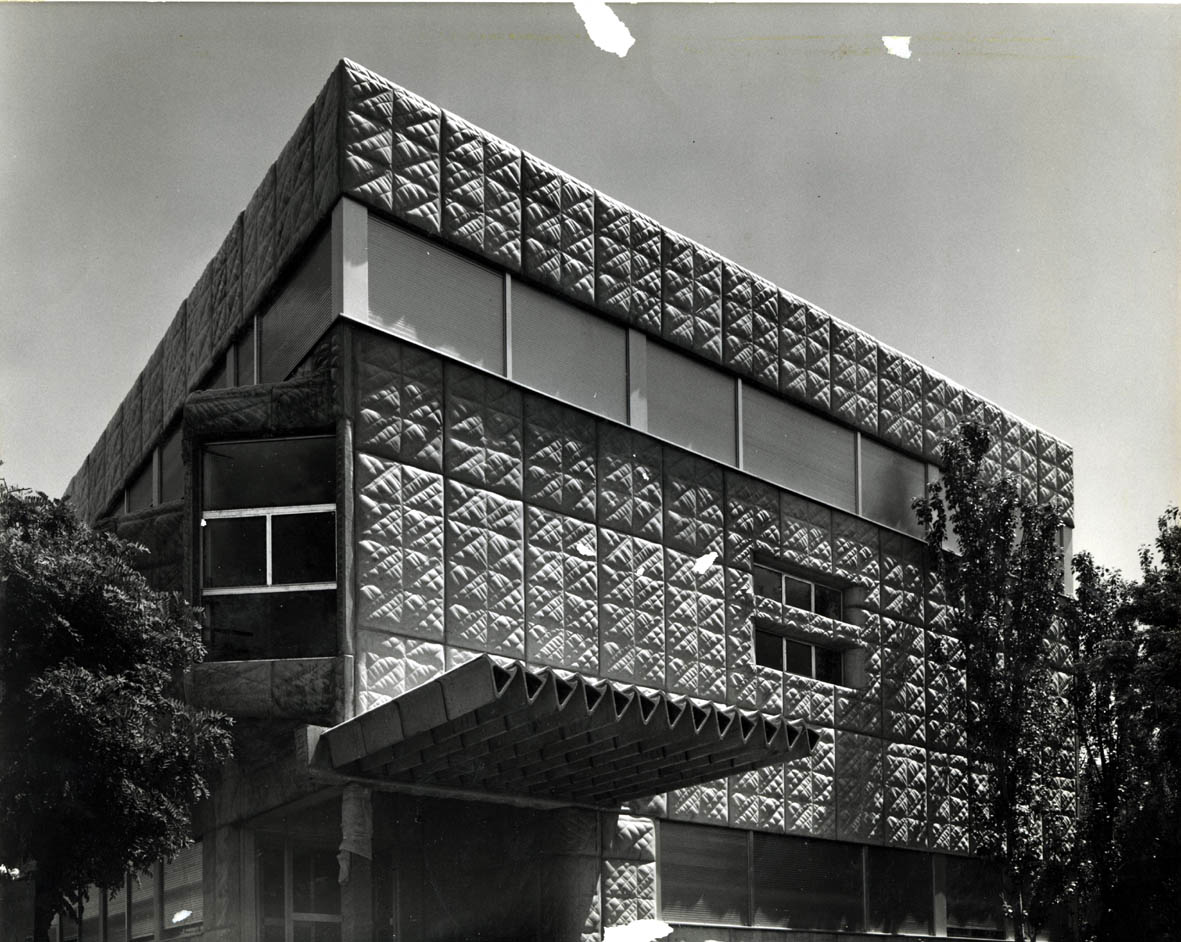
Fotografía exterior del MUPAG. Imagen cedida por la Fundación Fisac.
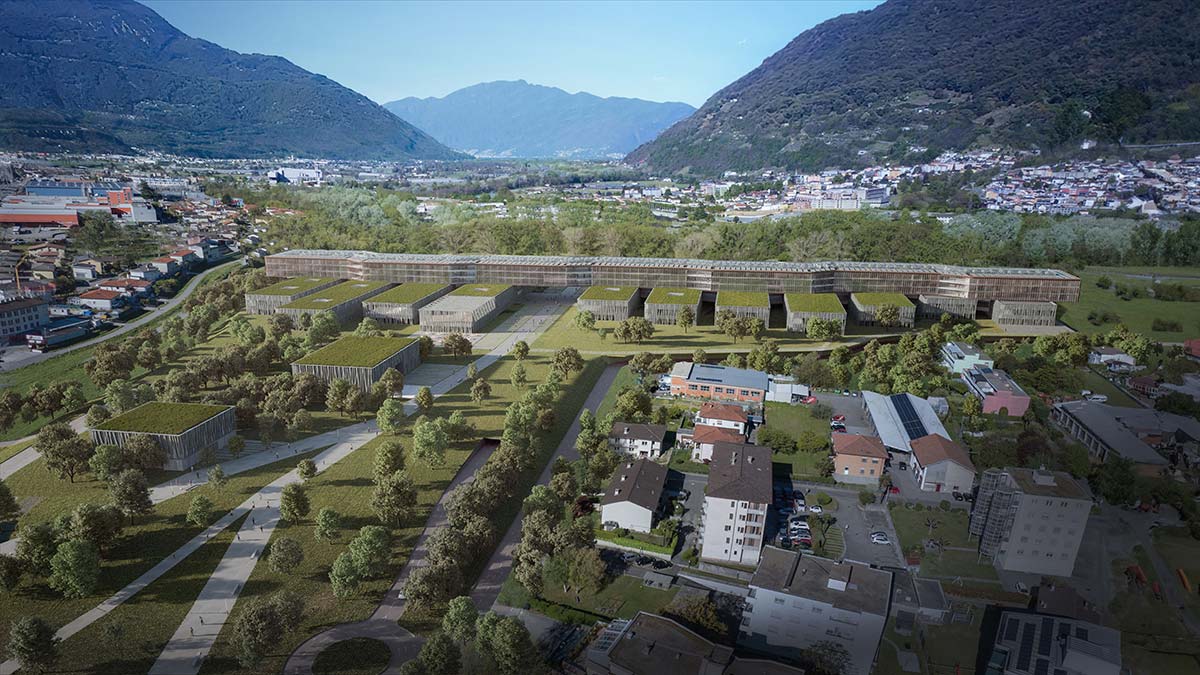
BELLINZONA REGIONAL HOSPITAL: HOSPITAL PRECISION ON AN INTERNATIONAL SCALE
The competition for the Bellinzona Regional Hospital in Switzerland was an exercise in adaptation and excellence for the team.
In this type of competition, architectural quality is highly valued, as is the studio’s ability to collaborate with local engineering firms, comply with the most stringent environmental regulations, and present a very high level of detail even at the competition stage.
ENERO Arquitectura’s project combined a clear hospital organisation with an envelope sensitive to the natural environment. The proposal focuses on the circulation routes, the entry of natural light, and the relationship with the alpine landscape.
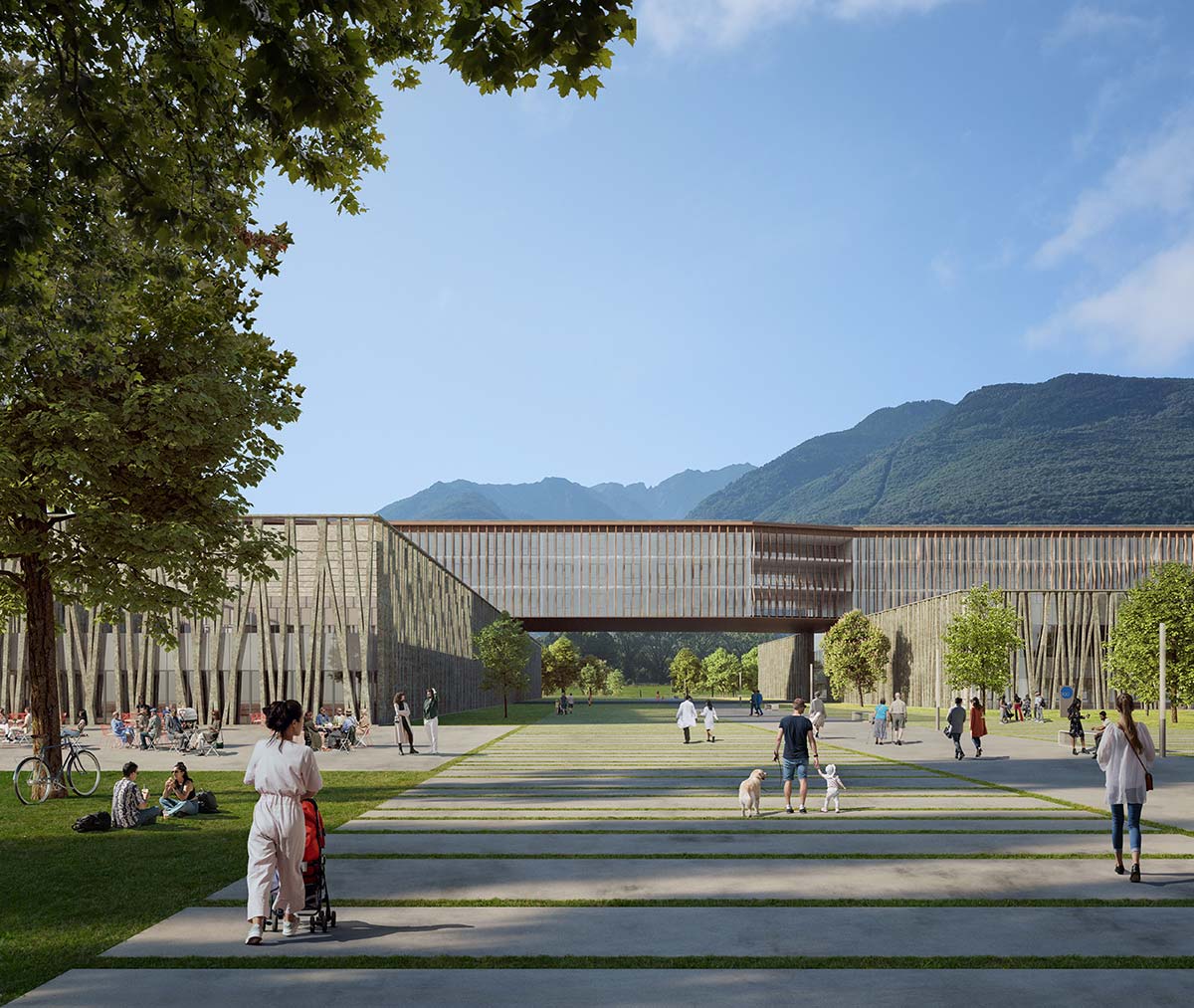
Imagen del exterior del Hospital Regional de Bellinzona.
PARADORES: ARCHITECTURE THAT CARES FOR HISTORY
ENERO Arquitectura’s track record in heritage competitions has been consolidated through its proposals for the Paradores hotel network. In recent years, the studio has won competitions for the refurbishment of the Paradores of Ciudad Rodrigo, Segovia, Olite, Jávea and Gredos.
These competitions require the formation of multidisciplinary teams capable of responding comprehensively to the challenges posed.
Thanks to this strategy, ENERO Arquitectura has established itself as a benchmark in hotel refurbishment within the public heritage sector, offering solutions that respect the building’s history without sacrificing its functional and energy upgrades.
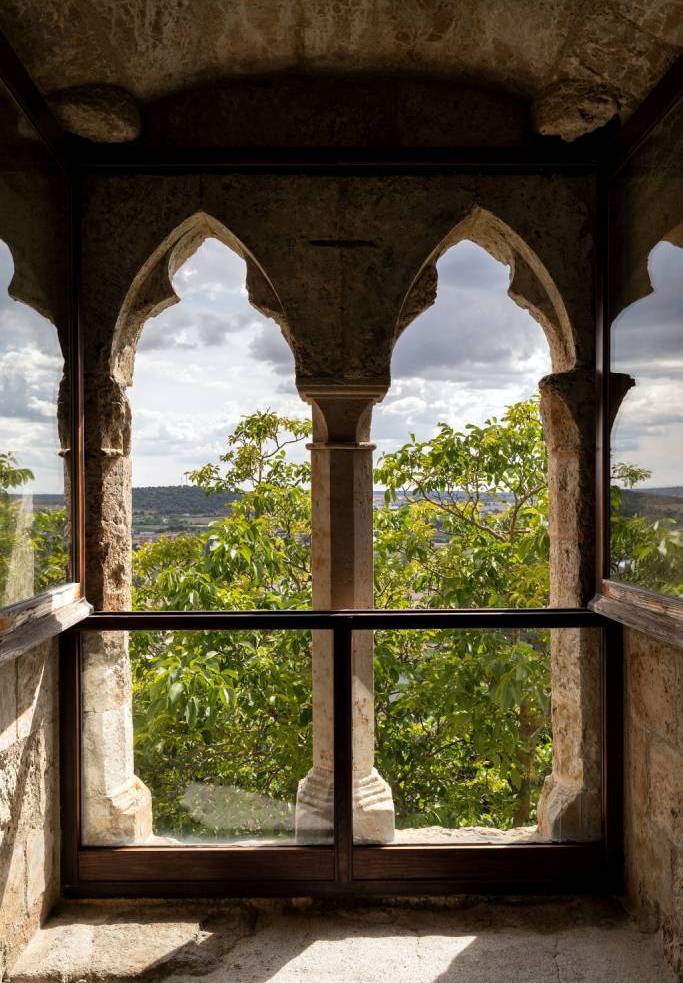
Fotografía del Parador de Ciudad Rodrigo. Fotografía cedida por Paradores.
BIOLOGICAL CONTAINMENT ANIMAL FACILITY 3 NCB3: ARCHITECTURE FOR RESEARCH IN CRITICAL CONDITIONS
Among the most specialised competitions recently developed by ENERO Arquitectura’s competitions team is that for the Biological Containment Animal Facility 3 (NCB3).
This high-security scientific facility required an extremely technical approach, with strict demands regarding biosafety, isolation, environmental control and internal operation.
ENERO Arquitectura tackled the challenge with a rigorous and functional proposal, designed to guarantee containment in a level 3 environment, where flows of personnel, animals, materials and waste are completely sectorised.
The design was developed in close collaboration with expert consultants in laboratories and critical environments, enabling a high degree of precision from the competition phase. Architecturally, the project combines technical operability with spatial quality, ensuring thermal, acoustic and lighting comfort in the work areas.
With these projects, ENERO Arquitectura consolidates its participation in public and private tenders, as well as its international presence, always maintaining its commitment to quality, innovation and respect for architectural history.